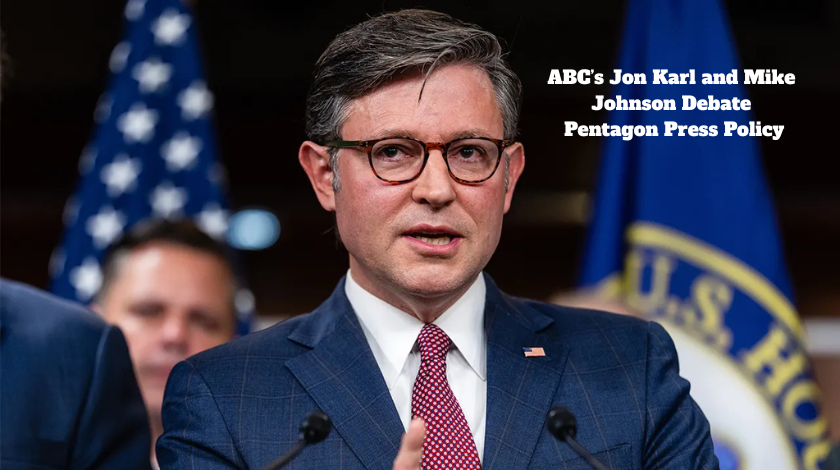
ABC’s Jon Karl and Mike Johnson Debate Pentagon Press Policy
If you’ve been following political news lately, you’ve probably noticed a surge in discussions around Pentagon press policy. It’s not exactly dinner table conversation, but suddenly, it’s everywhere headlines, talk shows, social media debates. So what changed? The spark came from a heated exchange involving Jon Karl and Mike Johnson, two influential figures representing very different perspectives on government transparency and national security.
At its core, this debate taps into something much bigger than just press access. It’s about who controls information, how much the public deserves to know, and where we draw the line between openness and protection. Think of it like a balancing act on a tightrope lean too far toward secrecy, and trust erodes; lean too far toward transparency, and sensitive information could slip into the wrong hands. That tension is exactly what makes this topic so compelling right now.
Key Players in the Discussion
Understanding the debate means understanding the people driving it. Jon Karl isn’t just another journalist he’s a seasoned political correspondent with years of experience covering the White House and defense matters. On the other side, Mike Johnson represents a political leadership perspective, where decisions are often filtered through the lens of national security and governance.
Their clash isn’t personal it’s philosophical. And when two strong viewpoints collide in such a public way, it naturally raises questions. Who’s right? Who’s protecting the public? And more importantly, what does this mean for the future of journalism and government accountability?
Who Is Jon Karl?
Career at ABC News
Jon Karl has built a reputation as one of the most recognizable faces in American political journalism. As a chief correspondent for ABC News, he’s spent years asking tough questions in high-stakes environments. His reporting often places him at the center of major political moments, from presidential briefings to national security discussions.
What sets Karl apart is his persistence. He doesn’t just report the news he challenges it. Imagine a watchdog that never sleeps, constantly sniffing out inconsistencies and pushing for clarity. That’s essentially Karl’s role in the media ecosystem. His approach reflects a broader belief that journalism isn’t just about delivering information—it’s about holding power accountable.
Influence in Political Journalism
Karl’s influence extends beyond television screens. His questions often shape public discourse, forcing policymakers to address issues they might otherwise avoid. In the context of the Pentagon press policy debate, his voice carries weight because he represents not just himself, but a broader community of journalists concerned about access and transparency.
When Karl speaks, he’s echoing a long-standing tradition of press freedom in democratic societies. His stance isn’t just about gaining access it’s about preserving a system where information flows freely enough for citizens to make informed decisions.
Who Is Mike Johnson?
Political Background and Role
Mike Johnson, currently serving as a prominent political leader, brings a completely different perspective to the table. As a policymaker, his responsibilities revolve around governance, security, and maintaining stability. That naturally shapes how he views issues like press access to sensitive institutions such as the Pentagon.
Johnson’s background in law and politics gives him a structured, rule-based approach. He’s not necessarily transparency but he emphasizes the need for controlled transparency, where information is shared responsibly without compromising national interests.
Policy Positions and Media Stance
Johnson’s stance in the debate reflects a common concern among policymakers: information can be a weapon. In an era where data travels instantly across the globe, even small leaks can have significant consequences. From his perspective, tightening Pentagon press policies isn’t about silencing journalists it’s about safeguarding national security.
This viewpoint often clashes with media professionals, who argue that restrictions can quickly turn into censorship. It’s a classic tug-of-war, and Johnson stands firmly on the side of caution.
Understanding Pentagon Press Policy
What the Policy Covers
Pentagon press policy governs how journalists interact with the U.S. Department of Defense. It outlines rules for press briefings, access to military officials, and reporting on defense-related matters. Think of it as a rulebook that determines how much of the military’s inner workings can be shared with the public.
These policies aren’t static they evolve based on global threats, technological advancements, and political priorities. That’s why debates like this one matter so much. Changes to these rules can reshape how information is reported and consumed.
Historical Context of Pentagon Media Access
Historically, the relationship between the Pentagon and the press has been complicated. During times of war, access tends to tighten. During periods of peace, it often loosens. It’s like a faucet that’s constantly being adjusted depending on the situation.
This push-and-pull dynamic has existed for decades, but today’s digital landscape adds a new layer of complexity. Information spreads faster than ever, making it harder to control narratives once they’re released.
The Core of the Debate
Transparency vs. National Security
At the heart of this debate lies a fundamental question: How much transparency is too much? Jon Karl argues that restricting press access undermines democracy by limiting the public’s ability to understand government actions. Mike Johnson counters that too much openness can expose vulnerabilities.
It’s a bit like leaving your front door open you want guests to feel welcome, but you also don’t want strangers walking in uninvited. Finding that balance is incredibly challenging, especially when the stakes involve national security.
Media Freedom Concerns
For journalists, any restriction feels like a slippery slope. Once access is limited, it can be difficult to regain. That’s why Karl and others push back so strongly they’re not just fighting for today’s access, but for the future of free press rights.
Key Arguments from Jon Karl
Defense of Press Freedom
Karl’s primary argument revolves around the idea that a free press is essential for democracy. Without it, governments operate in the shadows, and accountability diminishes. He believes that journalists need consistent access to ensure accurate reporting.
Concerns About Government Control
Karl also raises concerns about the potential for government overreach. If officials control what information is released, there’s a risk of shaping narratives to fit political agendas. That’s a scenario he and many journalists are determined to avoid.
Key Arguments from Mike Johnson
National Security Priorities
Johnson’s argument is rooted in protection. He emphasizes that certain information must remain confidential to prevent threats. In his view, stricter press policies are a necessary safeguard.
Accountability and Messaging Control
Johnson also points out that misinformation can spread quickly if sensitive details are misinterpreted. By controlling messaging, the government can ensure that information is accurate and responsibly shared.
Public and Media Reaction
Journalists’ Perspective
Many journalists side with Karl, viewing the policy changes as restrictive. They argue that reduced access limits their ability to report effectively.
Public Opinion Trends
Public opinion is divided. Some people support tighter controls for security reasons, while others worry about transparency. This split reflects the broader tension between safety and freedom.
Broader Implications of the Debate
Impact on Democracy
This debate isn’t just about the Pentagon it’s about the future of democracy. A free press is often called the “fourth pillar” of democracy, and any changes to its role can have far-reaching consequences.
Future of Pentagon Reporting
The outcome of this debate could reshape how defense-related news is reported. It might lead to new rules, new standards, and possibly new conflicts between journalists and policymakers.
Final Analysis and Takeaways
The debate between Jon Karl and Mike Johnson highlights a timeless conflict: freedom vs. security. Both sides present valid arguments, and neither offers a perfect solution. That’s what makes this issue so complex and so important.
Conclusion
The clash between Jon Karl and Mike Johnson over Pentagon press policy serves as a powerful reminder of how delicate the balance between transparency and security really is. It’s not a simple yes-or-no issue it’s a constantly evolving conversation shaped by global events, technological advancements, and political priorities. On one hand, journalists push for openness to ensure accountability and informed citizens. On the other, policymakers emphasize caution to protect sensitive information and national interests.
This debate isn’t going away anytime soon. If anything, it’s likely to intensify as the world becomes more interconnected and information travels faster than ever. What makes this moment significant is how clearly it exposes the tension at the heart of modern governance. It challenges us to think critically about what we value more complete transparency or controlled security and whether it’s possible to achieve both without compromise.
As readers and citizens, the real takeaway is awareness. Understanding these dynamics helps us better interpret the news we consume and recognize the forces shaping it behind the scenes.
FAQs
1. What is the Pentagon press policy?
It’s a set of rules that governs how journalists access and report on U.S. Department of Defense activities and information.
2. Why are Jon Karl and Mike Johnson debating this issue?
They represent opposing views on transparency versus national security, leading to a public discussion on press access.
3. Does stricter press policy limit freedom of speech?
It can impact press freedom, but supporters argue it’s necessary for protecting sensitive information.
4. How does this affect the public?
It influences how much information people receive about military and defense-related matters.
5. Will the policy change in the future?
It’s likely, as policies evolve based on political, technological, and global developments.