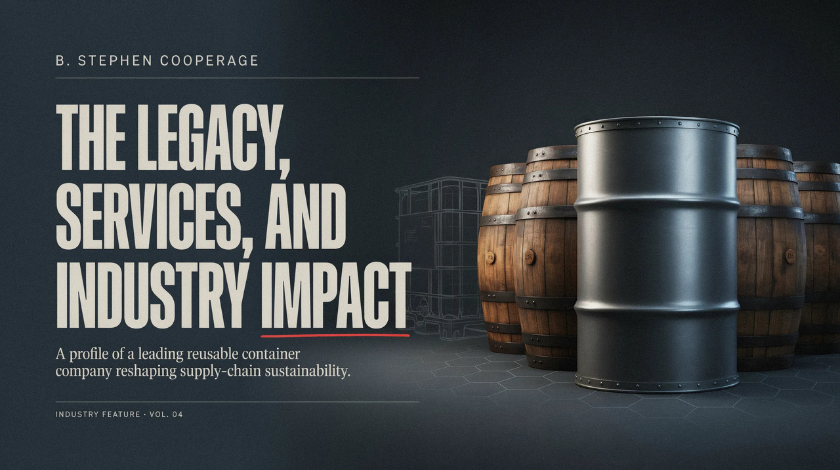
B Stephen Cooperage: The Legacy, Services, and Industry Impact
B Stephen Cooperage has built a strong reputation as one of the leading suppliers of reusable industrial containers in the western United States. Founded in 1949, the company has evolved from traditional cooperage roots into a modern business specializing in reconditioned drums, intermediate bulk containers (IBCs), pails, and industrial packaging solutions. Today, it serves manufacturers, chemical companies, food processors, waste management organizations, and logistics businesses seeking cost-effective and sustainable container solutions.
Understanding B. Stephen Cooperage
Company Overview
In an era where sustainability and operational efficiency have become essential business priorities, companies that specialize in reusable industrial packaging occupy a unique position in the supply chain. B. Stephen Cooperage stands out as one of those organizations. Based in California, the company has spent more than seven decades serving businesses that require reliable industrial containers for storage, transportation, and waste management. What makes the company particularly interesting is its ability to blend traditional cooperage values with modern environmental and industrial requirements. While the word “cooperage” historically referred to the craft of barrel making, B Stephen Cooperage has expanded that concept into a comprehensive industrial packaging operation.
The company supplies new and reconditioned containers ranging from small pails to large bulk storage systems. Its customers come from diverse sectors, including manufacturing, food processing, chemicals, pharmaceuticals, and environmental services. This broad customer base demonstrates the versatility of reusable container solutions. Businesses increasingly seek ways to reduce costs while maintaining compliance with safety regulations, and reusable industrial packaging provides an effective answer. B. Stephen Cooperage has positioned itself as a trusted partner in this space by offering quality products and container management services. According to company information, customer success remains one of its primary operating principles, helping explain its longevity in a competitive market.
Historical Background
The story of B. Stephen Cooperage reaches back much further than its official founding date. The company’s roots can be traced to a family tradition of cooperage that began in Eastern Europe during the late nineteenth century. Historical accounts indicate that Nathan Stephen worked as a cooper, repairing and reselling used wooden barrels. After immigrating to the United States, he continued applying those skills and eventually established a cooperage business in Cleveland, Ohio. This entrepreneurial foundation laid the groundwork for future generations of the Stephen family.
When B. Stephen Cooperage was officially established in 1949, the company inherited not only technical knowledge but also a business philosophy centered on reuse and resource efficiency. At a time when industrial expansion was accelerating across America, the demand for storage and transportation containers increased dramatically. Rather than limiting itself to traditional wooden barrels, the company adapted to changing industry requirements by expanding into steel drums, plastic containers, and specialized packaging solutions. This willingness to evolve became one of its defining characteristics. Many family-owned businesses struggle to adapt to market changes, but B. Stephen Cooperage embraced innovation while preserving its heritage. The result is a company that bridges generations of industrial expertise with contemporary logistics and environmental practices.
The Meaning of Cooperage in Modern Industry
Traditional Cooperage Origins
The term “cooperage” often evokes images of craftsmen carefully assembling wooden barrels in workshops filled with the scent of oak. Historically, coopers were among the most important artisans in commercial trade. Before modern packaging technologies existed, barrels served as essential containers for food, beverages, chemicals, and countless other goods. Their durability and portability made them indispensable to commerce. Entire industries depended on the skills of coopers, whose work directly influenced product quality and transportation efficiency.
Barrels were particularly significant in the storage and aging of wine, whiskey, rum, and other beverages. The craftsmanship involved in creating these containers required specialized knowledge of wood selection, shaping, and sealing techniques. Over time, cooperage became synonymous with reliability, durability, and precision. Those qualities remain relevant today even though industrial packaging has evolved considerably. Modern businesses still seek containers that protect products, maintain safety standards, and support efficient transportation. In many ways, contemporary industrial packaging represents a technological extension of traditional cooperage principles.
Modern Industrial Applications
Today’s industrial economy relies on packaging systems far more complex than wooden barrels alone. Steel drums, plastic drums, fiber containers, and intermediate bulk containers have become standard tools across numerous industries. B. Stephen Cooperage has successfully adapted to this evolution by offering products that meet modern transportation and safety requirements. The company’s portfolio includes containers designed for hazardous materials, bulk liquids, and industrial chemicals. These products must comply with strict regulations while remaining durable and cost-effective.
The transition from wooden barrels to advanced industrial packaging illustrates how industries evolve without abandoning foundational principles. Companies still require containers that protect contents, facilitate transportation, and support efficient operations. What has changed is the technology used to achieve those goals. Reconditioned drums and reusable containers now play a crucial role in sustainability initiatives. As organizations seek ways to reduce waste and lower costs, reusable packaging solutions have become increasingly attractive. B. Stephen Cooperage occupies a strategic position within this trend, helping businesses embrace both economic and environmental benefits through container reuse programs.
Company History and Growth
Founding in 1949
The year 1949 marked the formal establishment of B. Stephen Cooperage as a business entity. This period was characterized by rapid industrial expansion across the United States. Manufacturing facilities, chemical plants, and transportation networks were growing rapidly, creating significant demand for industrial containers. The company’s founders recognized an opportunity to serve these emerging needs through reusable packaging solutions. Rather than focusing solely on manufacturing new containers, they developed expertise in reconditioning and recycling existing packaging assets. This approach offered customers substantial cost savings while supporting resource conservation.
Over the decades, the company built a reputation for reliability and quality. Longevity in industrial markets often reflects consistent performance, and B. Stephen Cooperage’s continued operation for more than 75 years suggests strong customer relationships and effective management. Family-owned businesses frequently emphasize long-term relationships rather than short-term profits, and that philosophy appears to have contributed significantly to the company’s success. By maintaining a focus on customer service and operational excellence, the organization developed a loyal client base that supported its continued growth.
Expansion Across the Western United States
As industrial activity expanded throughout California and neighboring states, B. Stephen Cooperage increased its geographic reach. The company became recognized as one of the premier wholesale distributors of reusable containers in the western United States. This expansion required investments in logistics, inventory management, and customer support capabilities. Serving a diverse regional market demands more than simply maintaining inventory; it requires understanding industry-specific requirements and regulatory standards.
The company’s growth reflects broader trends in industrial packaging. Businesses increasingly value suppliers capable of providing comprehensive solutions rather than individual products. By offering new containers, reconditioned packaging, recycling services, and container management programs, B. Stephen Cooperage created a diversified service portfolio. This strategy not only increased revenue opportunities but also strengthened customer retention. Clients often prefer working with a single provider capable of addressing multiple packaging needs. As a result, the company established itself as an important participant in regional supply chains.
Products and Services
B. Stephen Cooperage offers an extensive range of industrial packaging products designed to meet varying operational requirements. The company supplies steel drums, plastic drums, fiber drums, pails, intermediate bulk containers, and specialized hazardous-material packaging. Many of these products are available in both new and reconditioned formats, allowing customers to choose solutions based on budget, regulatory requirements, and sustainability goals.
| Product Category | Applications | Key Benefits |
|---|---|---|
| Steel Drums | Chemicals, lubricants, industrial liquids | Durability and regulatory compliance |
| Plastic Drums | Food ingredients, chemicals | Corrosion resistance |
| Fiber Drums | Powders and dry materials | Lightweight construction |
| IBC Containers | Bulk liquid storage | High-capacity transport |
| Pails | Paints, coatings, food products | Versatility and convenience |
A particularly important aspect of the company’s operations is container reconditioning. Rather than discarding used containers, B. Stephen Cooperage cleans, repairs, inspects, and certifies them for reuse when appropriate. This process extends product lifecycles and reduces waste generation. Reconditioning also provides customers with significant cost savings compared to purchasing entirely new packaging. In industries where large numbers of containers are required, these savings can be substantial. The company’s expertise in reconditioning has become one of its defining competitive advantages and aligns closely with modern sustainability objectives.
Sustainability Initiatives
Environmental sustainability has become a major concern across industries worldwide. Organizations increasingly seek ways to reduce waste, lower carbon emissions, and support circular economic models. B. Stephen Cooperage’s business model naturally aligns with these objectives because it focuses heavily on reuse and reconditioning. Instead of treating containers as disposable assets, the company promotes extending their useful life through professional restoration and certification processes.
The environmental benefits of container reuse are significant. Manufacturing new steel or plastic containers requires raw materials, energy, and transportation resources. Reconditioning existing containers reduces demand for these inputs while minimizing landfill waste. Think of it like restoring a historic building instead of demolishing and rebuilding it. The restored structure continues serving its purpose while preserving resources that would otherwise be consumed. The same principle applies to industrial packaging. Every reused drum or container represents materials and energy conserved. As sustainability reporting becomes increasingly important for corporations, partnerships with reusable packaging providers can help organizations achieve environmental goals while reducing operational costs.
Industries Served
One reason for B. Stephen Cooperage’s longevity is its ability to serve multiple industries. Manufacturing companies rely on industrial containers for raw materials, finished goods, and process chemicals. Chemical producers require packaging capable of safely handling hazardous substances while meeting regulatory standards. Food processors need containers that maintain product integrity and cleanliness. Waste management organizations depend on reliable storage and transportation systems. Each sector has unique requirements, yet all require durable and compliant packaging solutions.
Serving such diverse markets requires technical expertise and regulatory knowledge. Hazardous-material containers, for example, must meet stringent Department of Transportation and United Nations specifications. Customers expect suppliers to understand these requirements and provide products that ensure compliance. B. Stephen Cooperage has built expertise in this area through decades of industry experience. This specialization creates value beyond simply supplying containers. Clients gain access to knowledge, guidance, and operational support that can reduce risks and improve efficiency. In competitive industrial environments, such expertise can be as valuable as the products themselves.
Competitive Advantages
Several factors distinguish B. Stephen Cooperage within the industrial packaging sector. First is its extensive experience. Operating since 1949 provides a depth of knowledge that newer competitors may struggle to match. Second is its commitment to customer service. Company descriptions consistently emphasize customer success as a core priority, suggesting a relationship-focused business model rather than a purely transactional approach.
Another major advantage involves sustainability expertise. As environmental concerns continue influencing purchasing decisions, companies capable of supporting reuse and recycling initiatives gain a competitive edge. B. Stephen Cooperage’s focus on reconditioned containers positions it well within this growing market segment. Regulatory compliance represents yet another strength. Industrial packaging requirements can be complex, particularly for hazardous materials. Customers value suppliers capable of navigating these challenges effectively. By combining experience, customer service, sustainability, and compliance expertise, the company has established a durable market position that continues attracting new customers while retaining existing ones.
Future Opportunities
The future of industrial packaging appears increasingly connected to circular economy principles. Businesses are under pressure from regulators, investors, and consumers to reduce waste and improve sustainability performance. Reusable packaging solutions fit naturally within this framework. Industry trends suggest growing demand for reconditioned containers, recycling services, and packaging management programs. Companies like B. Stephen Cooperage are well-positioned to benefit from these developments because their business models already align with emerging sustainability priorities.
Technological advancements may also create new opportunities. Improved tracking systems, digital inventory management, and enhanced reconditioning processes could increase efficiency and transparency. Customers increasingly expect visibility into supply chains and sustainability metrics. Providers capable of delivering both physical products and data-driven insights may gain significant advantages. B. Stephen Cooperage’s long history of adaptation suggests it has the flexibility needed to capitalize on future industry changes while maintaining its traditional commitment to quality and customer service.
Conclusion
B. Stephen Cooperage represents a remarkable example of a family-rooted business that successfully evolved with changing industrial needs. From its origins in traditional cooperage craftsmanship to its current role as a leading supplier of reusable industrial containers, the company has demonstrated resilience, innovation, and customer focus. Its expertise in reconditioning drums, supplying industrial packaging, and supporting sustainability initiatives has helped it remain relevant for more than seven decades.
As industries continue embracing circular economy principles and environmental responsibility, companies specializing in reusable packaging solutions are likely to become even more important. B. Stephen Cooperage’s combination of experience, regulatory knowledge, customer service, and sustainability leadership positions it strongly for continued success in the years ahead.
FAQs
1. What is B. Stephen Cooperage?
B. Stephen Cooperage is a California-based industrial packaging company specializing in reusable containers, drum reconditioning, IBCs, pails, and industrial packaging solutions.
2. When was B. Stephen Cooperage founded?
The company was founded in 1949 and has been operating for more than 75 years.
3. What products does B. Stephen Cooperage offer?
Its products include steel drums, plastic drums, fiber drums, pails, intermediate bulk containers, and hazardous-material packaging solutions.
4. Does the company provide container recycling services?
Yes. A major part of its business involves container reconditioning, recycling, and reuse programs that help customers reduce waste and costs.
5. Why is container reconditioning important?
Container reconditioning extends product life, reduces landfill waste, lowers manufacturing demand, and supports sustainability initiatives while saving money.