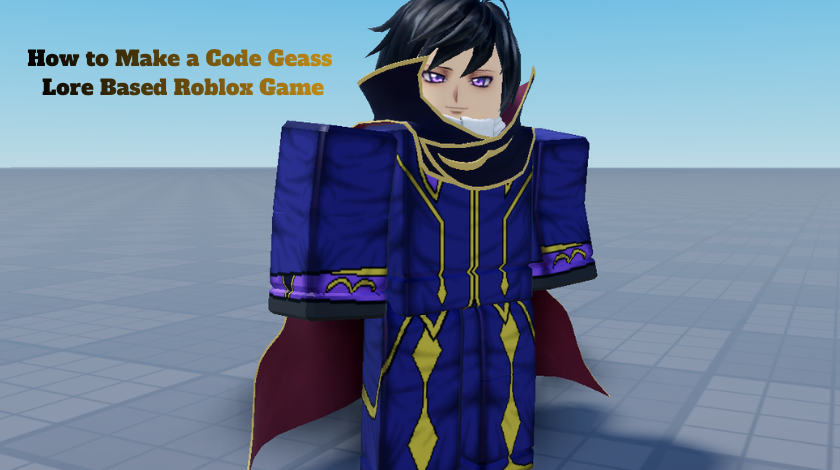
How to Make a Code Geass Lore Based Roblox Game
Creating a Code Geass-inspired Roblox game is one of the most ambitious projects an anime fan can take on. It combines political intrigue, military strategy, supernatural powers, faction warfare, and deep worldbuilding into a single experience. The challenge is that many Roblox developers focus only on combat systems and forget what made Code Geass unforgettable in the first place: the lore.
The Roblox platform is bigger than ever, with Roblox reaching roughly 144 million daily active users during late 2025, making it one of the largest gaming ecosystems in the world. That means there is a massive audience looking for unique anime experiences beyond generic battleground games. A properly designed Code Geass-inspired project could stand out because it offers strategy, politics, roleplay, diplomacy, rebellion, and large-scale warfare instead of simple button-mashing combat.
Before opening Roblox Studio and writing your first script, you need a blueprint. Think of your game like constructing an empire. If the foundation is weak, everything eventually collapses. This guide will walk through lore creation, gameplay systems, faction design, progression, monetization, and long-term growth while staying faithful to the spirit that made Code Geass legendary.
Understanding What Makes Code Geass Special
Most developers make the mistake of copying surface-level elements from an anime instead of understanding the deeper structure beneath it. If you simply add mechs, swords, and special powers, you do not have a Code Geass-inspired game. You have another generic anime fighting game. The true magic comes from the combination of political manipulation, military strategy, hidden agendas, and moral ambiguity.
The story revolves around a world dominated by the Holy Britannian Empire, an authoritarian superpower that conquered Japan and renamed it Area 11. The protagonist, Lelouch vi Britannia, gains the supernatural power known as Geass and uses it to challenge the empire from the shadows. The appeal isn’t just the action. Players become invested because every battle has political consequences.
When designing your Roblox game, ask yourself an important question: what experience should players remember? Should they remember winning fights, or should they remember overthrowing governments, betraying allies, and changing the fate of entire nations? The second option is much closer to what made the anime compelling.
A strong lore-based Roblox game should make every action feel meaningful. Capturing a city should matter. Losing a commander should matter. Forming alliances should matter. Players should feel like pieces on a giant geopolitical chessboard rather than warriors in a small arena.
Planning Your Roblox Game Vision
Before touching Roblox Studio, spend time creating a clear vision document. Imagine trying to build a skyscraper without architectural plans. That’s exactly what happens when developers start scripting immediately. The result is often a confusing mess of disconnected systems.
Decide whether your project will be:
| Genre | Advantages | Challenges |
|---|---|---|
| Roleplay | Strong immersion | Requires active community |
| Strategy | Deep gameplay | Complex balancing |
| Warfare | High engagement | Server optimization |
| RPG | Long-term progression | Content-heavy development |
| Hybrid | Maximum depth | Longer development time |
A hybrid approach often works best for a Code Geass-inspired game. Players can roleplay as politicians, soldiers, rebels, nobles, or Geass users while participating in large-scale wars. This combination creates endless replayability because every player experiences the world differently.
Your target audience matters too. Roblox’s user demographics have expanded significantly, with a growing percentage of players above age thirteen. This means you can safely create more sophisticated political and strategic systems rather than designing exclusively for younger players.
Think of your vision as a compass. Every future decision should point in the same direction.
Building a Deep Lore Foundation
Lore is the heartbeat of your game. Without lore, players have no reason to care about victories, defeats, or political struggles. They simply grind levels and leave.
Start by creating your own alternate world inspired by Code Geass instead of directly copying copyrighted material. Design several major nations with distinct ideologies. One empire might believe in military supremacy. Another might value democracy. A third could be ruled by corporations rather than governments.
Next, create a timeline spanning hundreds of years. Ask questions like:
- How did the empire rise?
- What caused previous wars?
- Which nations were conquered?
- Why do rebels oppose the government?
These historical events create context for current conflicts. When players join the game, they should feel as though they’re stepping into a living world that existed before their arrival.
Some of the most passionate Code Geass discussions online focus on Britannia’s alternate history and political structure because fans enjoy piecing together hidden lore details. Your game should encourage similar curiosity. Leave clues throughout the map. Add books, documents, recordings, and monuments that reveal pieces of history.
The more mystery you create, the more invested players become.
Designing the Geass System
The Geass system is arguably the most important mechanic in your game. Get it wrong, and everything falls apart. Make it overpowered, and nobody enjoys the experience. Make it too weak, and players lose interest.
A common mistake is allowing every player to obtain identical powers. That destroys the uniqueness of Geass. Instead, make Geass abilities rare and diverse.
Examples include:
| Geass Type | Ability |
|---|---|
| Command | Force obedience once |
| Memory | Alter memories |
| Vision | Predict movements |
| Persuasion | Influence negotiations |
| Detection | Reveal hidden enemies |
| Illusion | Create false perceptions |
Each ability should dramatically change gameplay rather than simply increasing damage numbers.
Balancing becomes crucial. The original series made Geass powerful but limited. Players should face consequences when using their abilities. Cooldowns, reputation loss, mental strain, or special requirements can prevent abuse.
Think of Geass like nuclear weapons in international politics. Their existence changes everything, but using them recklessly can create disaster.
Creating Factions and Governments
Factions are what transform your game from a simple RPG into a dynamic political simulator. Every player should belong to something larger than themselves.
Create multiple organizations with competing goals:
Rebel Organizations
Rebel groups provide some of the most exciting gameplay opportunities. They operate from hidden bases, conduct sabotage missions, gather intelligence, and attempt to weaken larger powers.
Players naturally enjoy being underdogs. There’s something thrilling about planning a rebellion against an empire that seems unbeatable. The original anime leveraged this feeling masterfully through the Black Knights and resistance movements.
Rebel players should experience constant tension. Every mission carries risks. Every victory comes at a cost. Every ally could become a traitor.
Imperial Leadership
On the opposite side, government players manage territories, taxes, military forces, and diplomacy. Their challenge isn’t survival. Their challenge is maintaining control.
Imagine being a governor responsible for suppressing unrest while managing resources and preventing invasions. That’s far more engaging than simply defeating enemies with stronger weapons.
Strong faction systems create stories players remember for years.
Developing Gameplay Mechanics
Gameplay is where lore becomes reality. You can write thousands of pages of worldbuilding, but if the gameplay feels boring, players won’t stay.
Combat should emphasize tactics rather than pure reaction speed. Introduce squad formations, battlefield objectives, supply lines, and strategic positioning. A weaker force using superior tactics should sometimes defeat a stronger army.
Territory control systems work especially well for Code Geass-inspired games. Different factions fight over cities, factories, military installations, and resource centers. Capturing these locations provides economic and military advantages.
Consider adding:
- Resource production
- Military recruitment
- Intelligence gathering
- Diplomacy systems
- Spy networks
- Economic warfare
This creates multiple paths to victory. Players can become generals, spies, politicians, merchants, or revolutionaries.
The goal is making every role feel important.
Building the World Map
A map should tell a story even before players read any lore. The environment itself becomes a form of storytelling.
Create major cities with unique architecture reflecting cultural identities. Imperial capitals should appear grand and intimidating. Rebel regions might look damaged but resilient. Neutral territories can act as trading hubs where different factions interact.
Military bases should feel alive with vehicles, guards, command centers, and training facilities. Hidden Geass locations should inspire mystery and curiosity.
Remember that exploration is gameplay. Players enjoy discovering secrets. Hidden tunnels, abandoned bunkers, ancient ruins, and forgotten laboratories encourage exploration.
The world should feel enormous even if the physical map isn’t massive. Strategic use of landmarks, transportation systems, and environmental storytelling can create that illusion.
A well-designed map becomes a character in its own right.
Progression and Roleplay Systems
Progression systems determine how long players remain invested. The best progression isn’t just about becoming stronger. It’s about gaining influence.
Instead of focusing exclusively on levels, introduce ranks, titles, political status, and social prestige.
Examples include:
| Rank Category | Example Progression |
|---|---|
| Military | Recruit → Commander → General |
| Government | Clerk → Governor → Chancellor |
| Rebels | Scout → Operative → Leader |
| Nobility | Baron → Duke → Prince |
This approach creates meaningful advancement. Players feel like they’re climbing societal structures rather than grinding numbers.
Story missions should complement progression. Rather than repetitive quests, create branching narratives with consequences. Choices should matter. Supporting one faction may permanently damage relations with another.
When players shape the world through their actions, roleplay becomes natural rather than forced.
Monetization Without Ruining Gameplay
Many Roblox games destroy themselves through aggressive monetization. Players immediately recognize pay-to-win systems, and communities often reject them.
The safest approach is cosmetic monetization.
Offer:
- Uniform skins
- Vehicle appearances
- Custom animations
- Special effects
- Character accessories
These purchases allow players to express themselves without gaining unfair advantages.
Premium memberships can provide convenience features like additional character slots, private headquarters, or expanded customization options. Avoid selling overpowered Geass abilities or exclusive combat advantages.
Roblox creators collectively earned over a billion dollars through the platform’s development ecosystem, proving that sustainable monetization works when players trust developers.
Trust is more valuable than short-term profits.
Launching and Growing Your Community
A great game without a community is like a kingdom without citizens. Success depends heavily on player engagement.
Start building your community before launch. Share development progress, concept art, faction previews, and lore teasers. Players enjoy feeling involved in a project’s creation.
Community events can dramatically increase retention. Examples include:
- Elections
- Rebellions
- Invasions
- Political summits
- World-changing story events
The best Roblox experiences create memories rather than simply offering gameplay loops. Players return because they want to participate in unfolding stories.
Given Roblox’s enormous scale and billions of engagement hours annually, there’s significant opportunity for unique lore-driven experiences to find dedicated audiences.
Listen to player feedback, but don’t abandon your vision every time someone complains. Great worlds maintain consistency.
Conclusion
Making a Code Geass lore-based Roblox game is much more than recreating anime battles. The true goal is building a living political world where every player becomes part of a larger story. Strong lore, balanced Geass abilities, meaningful factions, strategic warfare, and immersive roleplay systems all work together to create an unforgettable experience.
The most successful Roblox games aren’t always the ones with the flashiest graphics or biggest budgets. They’re the ones that make players feel something. A rebellion that took months to organize, a political betrayal that changed the balance of power, or a hidden Geass user secretly manipulating events behind the scenes can create memories that players talk about for years.
If you focus on worldbuilding first and mechanics second, you’ll have a much stronger foundation than most anime-inspired Roblox projects. Build your world like an empire, not a battleground.
FAQs
1. Can I directly use Code Geass characters in a Roblox game?
Using copyrighted characters can create legal issues. It’s generally safer to create original characters inspired by similar themes and storytelling elements.
2. What Roblox genre works best for a Code Geass-inspired project?
A hybrid strategy-roleplay-warfare game usually captures the anime’s political and military atmosphere better than a simple fighting game.
3. How many developers are needed for a project like this?
A small team of 3–10 developers can build a solid foundation. Larger teams can create more detailed worlds, lore systems, and events.
4. Should every player have a Geass ability?
No. Limiting Geass powers makes them feel special and prevents gameplay from becoming chaotic or unbalanced.
5. How long does development usually take?
A high-quality lore-based Roblox game can take anywhere from six months to several years depending on team size, experience, and project scope.