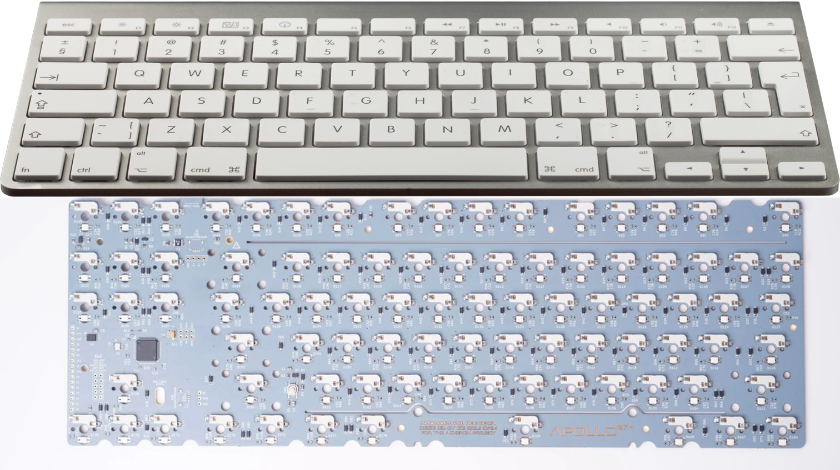
Can Apollo 87HL Be Used With Standard Layout?
Mechanical keyboard enthusiasts are a different breed of tech lovers. While most people simply plug in a keyboard and start typing, keyboard hobbyists spend hours debating switch materials, stabilizer tuning, plate flex, and PCB compatibility. Somewhere in this rabbit hole sits the Apollo 87HL, a PCB that has quietly gained popularity among custom keyboard builders. One of the most common questions surrounding it is surprisingly simple: Can Apollo 87HL be used with a standard layout? The short answer is yes, but the real explanation goes much deeper than that.
The Apollo family of PCBs was originally designed around the TKL (Tenkeyless) format. According to the official documentation from the Acheron Project, the Apollo lineup supports several layout variants including standard ANSI-style configurations. That means users who prefer a conventional typing experience are not locked out of using this PCB. At the same time, the Apollo 87HL also supports enthusiast-friendly variations like Tsangan bottom rows and stepped Caps Lock setups. This flexibility is exactly why many custom keyboard builders gravitate toward it.
The confusion usually happens because the naming conventions can look intimidating. Terms like “87H,” “87HL,” “87H-T-SC,” and “88H” sound more like spaceship components than keyboard parts. Once you break everything down, though, the picture becomes much clearer. Think of the Apollo 87HL as a flexible chassis in a sports car it can be configured for comfort or performance depending on how you build it. You are not forced into an exotic layout if you simply want a reliable, standard typing experience.
Another reason this topic matters is the growing popularity of custom keyboards in 2025 and 2026. More users are moving away from prebuilt gaming keyboards and exploring enthusiast-grade options. Many people want the premium acoustics and build quality of custom boards without sacrificing familiar key placement. That is where the Apollo 87HL becomes incredibly appealing.
Understanding the Apollo 87HL PCB
What Makes the Apollo 87HL Popular
The Apollo 87HL belongs to the broader Apollo PCB ecosystem developed by the Acheron Project. These PCBs were engineered primarily for TKL custom keyboard builds and became especially popular among enthusiasts using premium keyboard cases such as the Geon F1 series. The PCB focuses heavily on flexibility, offering support for multiple configurations while maintaining enthusiast-level features like per-key RGB and hot-swap support.
One major reason for its popularity is that it balances customization with practicality. Some enthusiast PCBs go so deep into niche layouts that average users struggle to adapt to them. The Apollo series avoids that trap by maintaining compatibility with standard ANSI TKL layouts while still giving hardcore enthusiasts room to experiment. It is almost like buying a camera that works perfectly in auto mode but also allows full manual control when you want to dive deeper.
The Apollo 87HL also gained traction because of its build quality and firmware support. QMK and VIA compatibility make remapping keys straightforward for users who want personalization without complicated coding. Community support has also grown significantly across Reddit and enthusiast forums, where builders frequently share successful Apollo-based setups.
Another overlooked factor is aesthetics. Many enthusiasts love the clean TKL format because it preserves the function row and navigation cluster while removing the numpad. This creates a compact desk setup without forcing users to relearn key positions. The Apollo 87HL fits perfectly into that philosophy.
Core Features of the Apollo 87HL
The Apollo 87HL offers several features that make it attractive in the premium mechanical keyboard space. According to available technical information, the PCB supports MX-style switches, hot-swappable sockets, RGB lighting, and ANSI-compatible layouts. These are features many users expect from modern enthusiast-grade PCBs.
Here is a simplified overview of the key features:
| Feature | Apollo 87HL Support |
|---|---|
| TKL Layout | Yes |
| ANSI Standard Layout | Yes |
| Hot-Swap Support | Yes |
| RGB Lighting | Per-key RGB |
| QMK Firmware | Supported |
| VIA Compatibility | Supported |
| MX Switches | Compatible |
| Tsangan Bottom Row | Optional |
What really stands out is the PCB’s adaptability. You can configure it for a traditional 6.25u spacebar setup or opt for alternative bottom rows if desired. That means users are not forced into uncommon layouts. If your goal is to build a keyboard that feels familiar right out of the box, the Apollo 87HL absolutely allows that.
The PCB also supports advanced enthusiast preferences like stepped Caps Lock and alternative modifier arrangements. These are optional rather than mandatory. Think of them as bonus toppings on a pizza—you can enjoy the classic version without adding anything unusual.
What Is a Standard Keyboard Layout?
ANSI vs ISO Layouts
Before determining whether the Apollo 87HL supports a standard layout, it helps to define what “standard” actually means. In the mechanical keyboard world, the two dominant standards are ANSI and ISO layouts. ANSI is the most common layout in the United States and many international gaming keyboards, while ISO is more common in Europe.
The ANSI layout typically features:
- A horizontal Enter key
- Left Shift key that is longer
- Standard 6.25u spacebar
- Familiar modifier arrangement
The Apollo 87HL primarily targets ANSI-style TKL configurations. Official documentation specifically references support for “default ANSI layout” configurations with standard spacing. That means users who are accustomed to mainstream keyboards from brands like Logitech, Corsair, or Keychron will likely feel at home.
ISO users may encounter limitations depending on the exact PCB revision and plate combination. This is important because keyboard compatibility is not just about the PCB itself. The plate, case, and stabilizer setup all influence whether a layout works correctly. In custom keyboards, every component is part of a larger ecosystem.
What makes the Apollo lineup appealing is that it keeps the standard ANSI foundation intact while allowing advanced users to branch out into custom territory. That balance is relatively rare in enthusiast keyboard hardware.
Typical TKL Standard Configurations
A standard TKL layout generally includes 87 keys arranged in a familiar structure:
- Full function row
- Arrow cluster
- Navigation keys
- Standard modifier keys
- 6.25u spacebar
The Apollo 87HL was designed around exactly this concept. The “87” in the name literally refers to the standard 87-key TKL arrangement. So if you are wondering whether the PCB supports a normal typing setup, the answer is undeniably yes.
The board becomes more flexible only when users intentionally choose alternative layouts. You can think of the Apollo 87HL as a highway with optional exits. Staying on the standard route is perfectly valid and fully supported.
Apollo 87HL Compatibility Explained
Supported Layout Variants
The Apollo family supports several layout variants. Official documentation references:
- 87H standard ANSI
- 87H-T-SC
- 88H-T-SC
- Alternative bottom-row layouts
The standard 87H configuration is specifically described as supporting the default TKL ANSI layout with a standard spacebar. This is the clearest evidence that the Apollo 87HL works perfectly with standard layouts.
The Tsangan variants mainly alter the bottom row spacing and introduce stepped Caps Lock options. These changes are targeted at enthusiasts seeking a unique typing feel or aesthetic. Average users do not need to use these configurations unless they want to experiment.
This flexibility is one reason Apollo PCBs have remained relevant in the enthusiast scene. Builders appreciate hardware that allows gradual customization rather than forcing immediate commitment to niche layouts.
Hot-Swap and Soldered Options
One of the biggest advantages of the Apollo 87HL is hot-swap capability. Hot-swap sockets allow users to install or remove switches without soldering. This matters because experimenting with layouts becomes far easier.
For standard layout users, hot-swap support means:
- Easier maintenance
- Faster switch testing
- Less risk during assembly
- Simpler upgrades
Many keyboard enthusiasts start with a standard ANSI setup and later branch into experimental layouts after gaining experience. The Apollo 87HL supports this journey naturally.
Spacebar Compatibility
The standard Apollo layout supports a 6.25u spacebar, which is the most common size in mainstream keycap sets. This is excellent news for users worried about keycap compatibility.
A non-standard spacebar can turn a keyboard build into a scavenger hunt. Thankfully, Apollo users sticking to the standard layout avoid that headache entirely.
Modifier Key Support
Modifier compatibility is equally important. The Apollo 87HL supports conventional Ctrl, Alt, and Windows key positioning in standard configurations. This ensures compatibility with most keycap kits on the market.
That means users can buy standard Cherry-profile or OEM-profile keycap sets without worrying about odd-sized modifiers.
Cases and Plates Compatible With Apollo 87HL
Geon F1-8X Compatibility
One of the most discussed compatibility pairings involves the Geon F1-8X series. Community discussions and build showcases frequently pair Apollo PCBs with these premium cases.
This compatibility matters because keyboard PCBs are highly dependent on mounting alignment. Even if a PCB technically supports a layout, it still needs to fit correctly inside the case and align with the plate. Apollo boards have gained a positive reputation largely because they integrate well with respected enthusiast cases.
Builders often describe Apollo-based Geon builds as both acoustically satisfying and structurally solid. The typing experience is frequently praised for its balance between firmness and flexibility.
Common Mounting Limitations
Despite its versatility, the Apollo 87HL is not universally compatible with every TKL case. Official documentation mentions certain incompatibilities with boards like the ai03 KBD8X MKII due to connector positioning differences.
This highlights an important truth in the custom keyboard world: “standard layout” does not always guarantee universal hardware compatibility. PCB dimensions, USB placement, and mounting points all matter.
Users planning a build should always verify:
- Case compatibility
- Plate compatibility
- Stabilizer clearance
- USB port alignment
Skipping these checks can turn an exciting build into an expensive frustration.
Benefits of Using Apollo 87HL With Standard Layout
Easier Keycap Compatibility
One of the biggest advantages of sticking with a standard layout is keycap compatibility. Most premium keycap sets are designed around ANSI standards. This means Apollo 87HL users can choose from thousands of available keycap designs without hunting for obscure sizes.
The custom keyboard hobby already gets expensive quickly. Using a standard layout helps reduce unnecessary complications. You can focus on enjoying the build instead of obsessing over missing modifier keys.
This also helps future-proof your setup. If you decide to swap keycaps later, standard compatibility gives you far more options.
Better Typing Consistency
A standard layout also improves typing consistency. Muscle memory matters more than many people realize. Even small changes in modifier placement can disrupt typing speed and workflow.
For gamers, programmers, and office users, maintaining familiar spacing often results in:
- Faster adaptation
- Fewer typing errors
- Better gaming consistency
- Improved productivity
The Apollo 87HL allows enthusiasts to enjoy premium custom keyboard quality without abandoning years of typing habits.
Challenges Users Might Face
Stabilizer Alignment Issues
Even with standard layout support, stabilizer installation can occasionally become tricky depending on the plate used. Poor alignment can lead to rattling, ticking, or mushy keystrokes.
This is not unique to Apollo boards. It is a common challenge across enthusiast keyboards. Proper tuning often requires:
- Lubrication
- Wire balancing
- Foam adjustments
- Careful installation
The good news is that standard ANSI stabilizer sizes are widely available and easy to source.
Firmware and VIA Configuration
Firmware setup can intimidate first-time builders. Apollo PCBs support QMK and VIA firmware environments. While VIA simplifies remapping significantly, users may still need to flash firmware manually during initial setup.
Fortunately, the enthusiast community has produced many tutorials and guides. Once configured, the experience becomes extremely user-friendly.
How to Configure Apollo 87HL for Standard Layout
Choosing the Correct Plate
The plate determines switch positioning and layout support. Users seeking a standard ANSI build should choose plates explicitly designed for:
- ANSI TKL
- 6.25u spacebar
- Standard modifier spacing
Plate compatibility is just as important as PCB compatibility.
Flashing the Proper Firmware
Firmware flashing ensures all keys function correctly. Official QMK support includes standard layout configurations for Apollo boards.
Most users can complete setup using:
- QMK Toolbox
- VIA
- Official firmware files
The process sounds intimidating at first, but it becomes surprisingly straightforward after one successful flash.
Apollo 87HL vs Other TKL PCBs
Comparison Table
| PCB | Standard ANSI Support | Hot-Swap | RGB | QMK/VIA | Enthusiast Layouts |
|---|---|---|---|---|---|
| Apollo 87HL | Yes | Yes | Yes | Yes | Yes |
| H87C | Yes | Limited | No | Yes | Moderate |
| Fave87 | Yes | No | Limited | Yes | Moderate |
| KBD8X PCB | Yes | Depends | Limited | Yes | Moderate |
The Apollo 87HL stands out because it combines flexibility with mainstream usability.
Is Apollo 87HL Worth Buying in 2026?
In 2026, the Apollo 87HL still holds strong value for keyboard enthusiasts who want a premium TKL experience without abandoning standard typing conventions. The PCB supports familiar ANSI layouts while offering room for experimentation later.
For newcomers entering the enthusiast scene, this balance is incredibly valuable. Many users initially think they need highly unconventional layouts to enjoy custom keyboards. The Apollo 87HL proves otherwise. You can keep your familiar layout while still gaining:
- Better acoustics
- Premium build quality
- Switch customization
- Advanced firmware control
That balance between familiarity and flexibility is exactly why the Apollo platform remains respected in the mechanical keyboard community.
Conclusion
Yes, the Apollo 87HL can absolutely be used with a standard layout. In fact, supporting standard ANSI TKL configurations is one of its core strengths. The PCB was intentionally designed to accommodate mainstream layouts while also giving enthusiasts access to more advanced configurations when desired. Official documentation clearly references support for standard ANSI arrangements with common spacebar sizes and modifier placements.
What makes the Apollo 87HL especially appealing is that it does not force users into niche territory. You can build a keyboard that feels completely familiar while still enjoying enthusiast-grade features like hot-swap sockets, QMK support, VIA customization, and premium acoustics. It is a flexible platform rather than a restrictive one.
For most users, the safest approach is to pair the PCB with a compatible ANSI plate and standard keycap set. Doing so creates a reliable, comfortable, and highly customizable typing experience without unnecessary complications.
FAQs
1. Does Apollo 87HL support standard ANSI layout?
Yes, the Apollo 87HL supports standard ANSI TKL layouts including the common 6.25u spacebar configuration.
2. Can I use normal keycap sets with Apollo 87HL?
Absolutely. Standard ANSI-compatible keycap sets work perfectly when using the standard layout configuration.
3. Is Apollo 87HL hot-swappable?
Yes, Apollo 87HL variants include hot-swap support for MX-style mechanical switches.
4. Does Apollo 87HL require QMK firmware?
The PCB supports QMK firmware and VIA compatibility, but VIA makes customization much easier for beginners.
5. Is Apollo 87HL good for beginners?
Yes. While it is enthusiast-grade hardware, users sticking to standard layouts will find the learning curve manageable compared to highly experimental keyboard builds.